
Reef-Safe by Law. Luxury by Design.
Hawaii's 2021 sunscreen law banned the two chemicals most sunscreens still use. Solvyn Shield was built mineral-first — non-nano zinc oxide, single-use sachets, heat-stable to 110°F. Compliant by default. Elevated on purpose.
Hawaii's Sunscreen Law, Explained
In May 2018, Hawaii became the first U.S. state to ban the sale and distribution of sunscreens containing two specific chemicals — oxybenzone and octinoxate. The law, Act 104, took effect January 1, 2021. Maui County went further in 2022, adding avobenzone and octocrylene to its own county-level ban.
The reason: peer-reviewed research from NOAA and the National Academies links these chemicals to coral bleaching, DNA damage in marine life, and reef ecosystem collapse — even at trace concentrations measured in parts per trillion.
Bringing a chemical sunscreen into Hawaii isn't illegal for a visitor. Selling or applying one in Hawaii's waters is a different story — and increasingly, so is being seen with one at a resort.
Act 104 signed — first U.S. state sunscreen ban.
Statewide ban takes effect on oxybenzone and octinoxate.
Maui County expands ban — adds avobenzone and octocrylene.
Growing federal and international pressure on chemical SPF.
What's Actually Banned — and Why
Four chemical UV filters. All common. All still in most grocery-store sunscreens — and all implicated in the reef damage you see on Hawaii's coastline.
Oxybenzone
Damages coral DNA and causes larval deformities at 62 parts per trillion — a drop in an Olympic pool.
Octinoxate
Disrupts coral reproduction and accelerates bleaching under heat stress in tropical waters.
Avobenzone
Breaks down in sunlight into compounds that persist in marine sediment long after exposure.
Octocrylene
Degrades into benzophenone, a known endocrine disruptor linked to hormonal and reef impact.
Why Mineral Is the Only Reef-Safe Answer
Chemical sunscreens absorb UV through a molecular reaction inside your skin. Mineral sunscreens sit on top and reflect it. The biology of how they work is exactly why one damages reefs — and one doesn't.
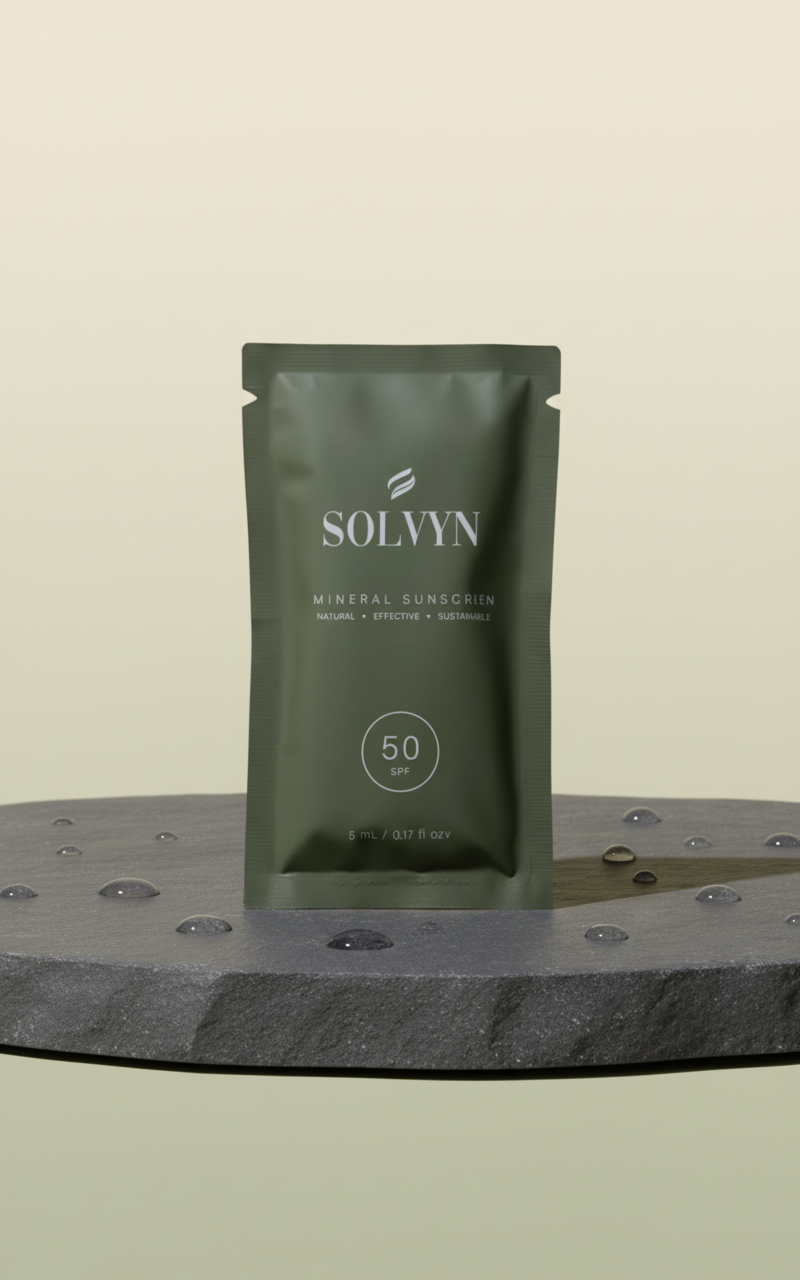
Shield Meets the Standard. And Raises It.
Shield isn't "reef-safe compliant." It's reef-safe native — built from a single mineral filter at a concentration (17.5% non-nano zinc oxide) high enough to deliver SPF 50 without a single chemical helper. No greenwashing. No asterisks. No surprise ingredients in the fine print.
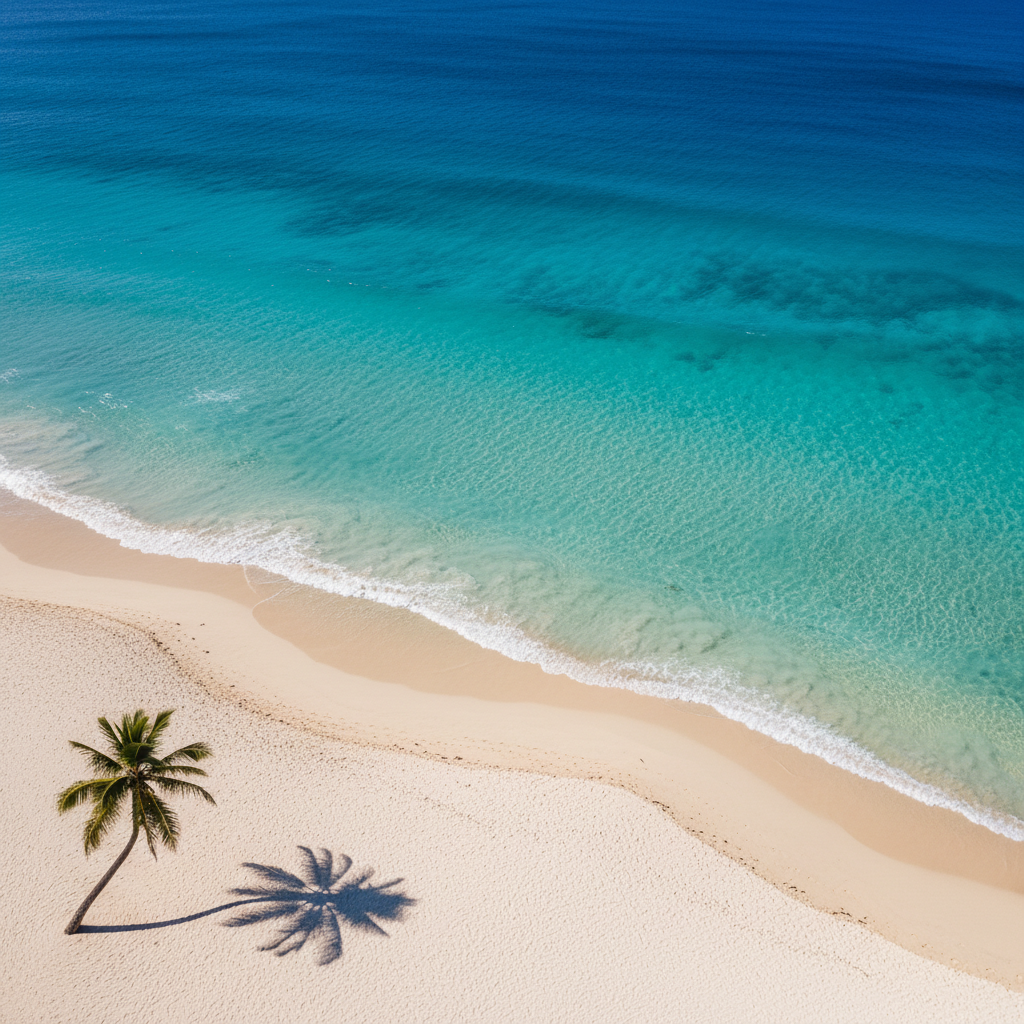
Engineered for Hawaii's Environment
Compliance is the floor. Performance in tropical conditions is what actually matters on a reef.
Heat-Stable to 110°F
Formulated to hold structure in direct Hawaiian sun — no separation, no SPF drift.
80-Minute Water-Resistant
Tested for snorkeling, swimming, and open ocean — without shedding into the water column.
Single-Use Sachets
No communal pumps, no cross-contamination on shared beaches and resort pools.
Non-Nano Particle Size
Zinc particles above 100nm — too large to be absorbed by coral polyps or filter through skin.
Where Shield Belongs in Hawaii
Hawaii runs on its water — on the reefs that draw five million visitors a year and on the resorts, charters, and tour ops that serve them.
Protect both. That's the assignment.
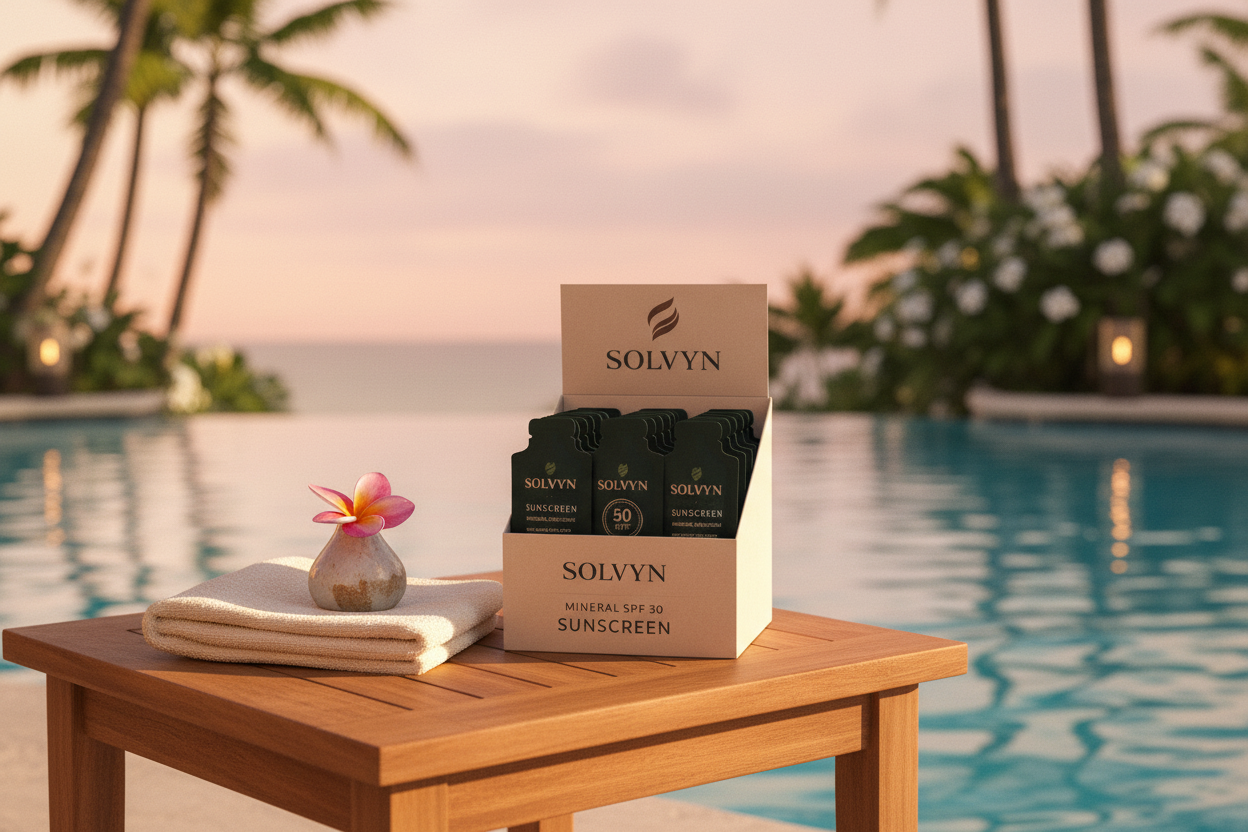
Resort Pools & Beaches
Maui, Kauai, Oahu, Big Island. Hand guests a compliant sachet on arrival — not a chemical pump bottle they'll rinse into your reef.
Snorkel & Dive Charters
Meet reef-entry guidelines without an awkward conversation at the dock. One SKU covers every boat and every guest.
Beachfront Weddings & Events
Elevated guest favor for long days outdoors — branded, compliant, and actually worth keeping.
Island Tour & Activity Ops
From Road to Hāna to Nā Pali — one SKU, zero compliance risk, no fuss for your guides.
Hawaii Reef-Safe Sunscreen FAQ
Everything travelers and operators ask before a Hawaii trip.
Is Solvyn Shield legal to sell and use in Hawaii?
Yes. Shield is 100% mineral — non-nano zinc oxide only. It contains zero oxybenzone, octinoxate, avobenzone, or octocrylene, so it is fully compliant with both Hawaii's statewide law and Maui County's expanded ban.
What sunscreen ingredients are banned in Hawaii?
Statewide: oxybenzone and octinoxate (effective January 1, 2021). Maui County additionally bans avobenzone and octocrylene (effective 2022). Chemical filters not on the list — like homosalate — remain legal but face growing scrutiny.
Can I bring chemical sunscreen into Hawaii as a tourist?
Technically yes — the ban targets sale and distribution, not personal possession. But most resorts, snorkel charters, and marine-park tours now ask guests not to use chemical SPF, and some refuse entry. Mineral is the safer choice either way.
Is "non-nano" zinc oxide actually important?
Yes. Non-nano particles (larger than 100 nanometers) are too big to be absorbed by coral polyps or through human skin. Shield's zinc is confirmed non-nano — which is why it earns both dermatologist and reef-safe classifications.
How much Shield do I need for a week in Hawaii?
Plan for two to three sachets per person per beach day. A 10-pack covers a long weekend; a 30-pack covers a full family vacation with reapplication every 80 minutes of water time.
Does TSA allow sunscreen in carry-on luggage?
Yes — under 3.4 oz (100ml). Shield sachets are 5ml each, so an entire pack flies easily in your personal item or carry-on.
Is mineral sunscreen as effective as chemical sunscreen?
At equivalent SPF ratings, yes. The FDA classifies both zinc oxide and titanium dioxide as GRASE (Generally Recognized As Safe and Effective) — the highest rating. Shield delivers broad-spectrum SPF 50 using zinc alone.
Why does Shield come in single-use sachets instead of a tube?
Hygiene at shared water (pools, beach showers, tour boats), precise dosing, and no waste from oxidized product in a half-used tube left in a beach bag at 90°F.
Arrive Ready for Reef-Safe Paradise
Pack clean. Protect both your skin and the water you came here for.